
Ultimately, patient area testing serves to verify that the immediate clinical environment where healthcare is delivered remains structurally secure, electrically safe, and fully compliant with national standards.

Here are the major standards and frameworks
- AS/NZS 3003 — “Electrical Installations – Patient Treatment Areas”. Defines classification of body/cardiac protected electrical areas, testing & certification requirements.
- AS/NZS 3551 — “Management programmes for medical equipment”, i.e., testing, calibration, preventive maintenance of medical electrical equipment. Referenced by biomedical testing services.
- AS/NZS 3760 — Electrical safety testing and tagging of electrical equipment (general) but often referenced alongside medical-equipment contexts. Thus, compliance means meeting both equipment-specific standards (device testing) and installation/area standards (patient area).
5. Typical Process & Who’s Involved
Biomedical Testing Workflow
- Inventory of medical equipment (device type, location, Operational risk profile (patient-connected vs non-patient-connected).
- Determine required test/maintenance intervals based on risk, manufacturer guidelines and institutional accreditation standards.
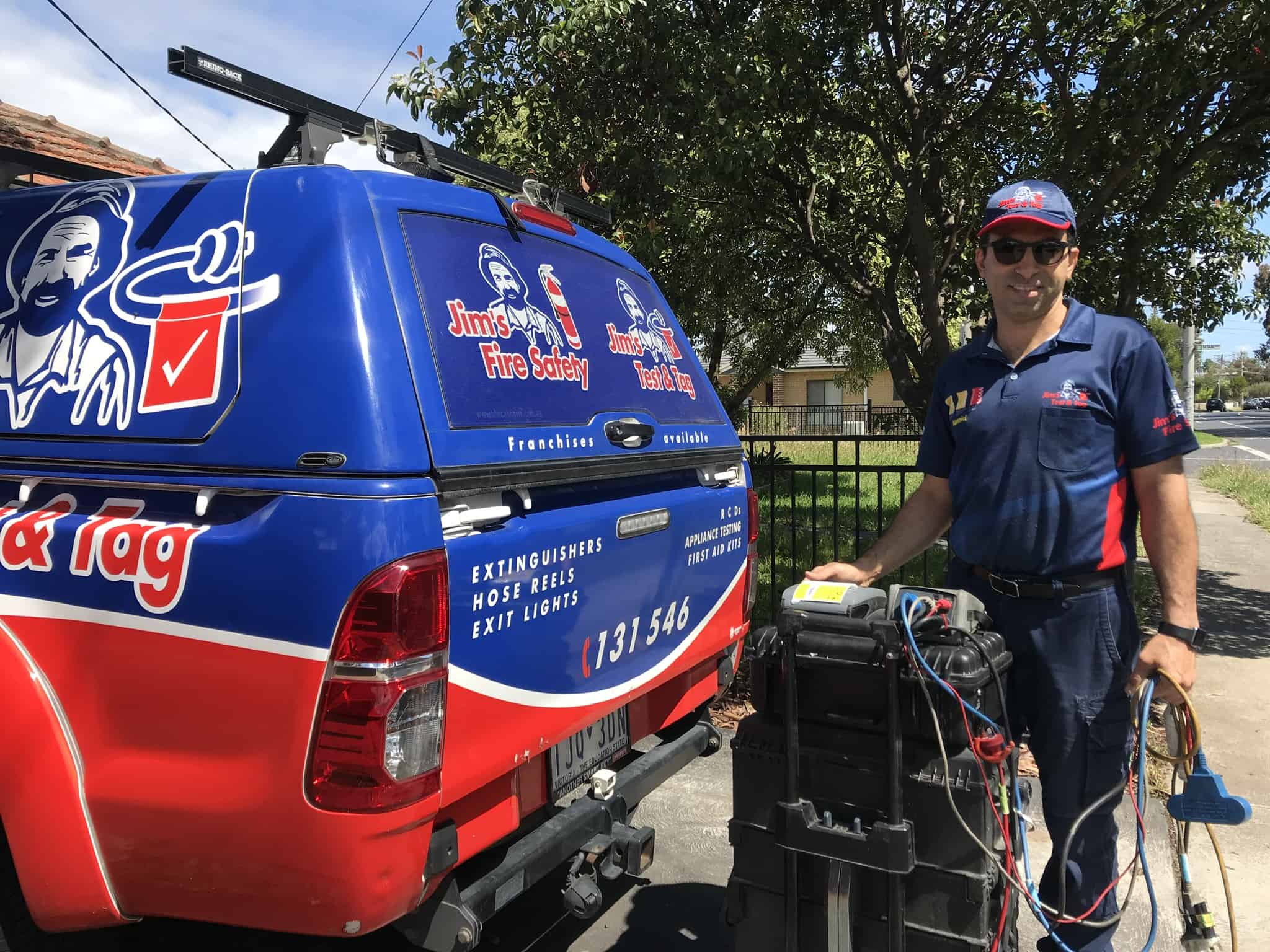
- Jim’s Test & Tag performs electrical safety tests (earth continuity, leakage current
),documentation/reporting. - Tagging/labelling of device clearly with next test date, maintenance history.
- If equipment fails, repair or replace, document action.
- Maintain records for audits, accreditation.
Patient Area Testing Workflow
- Identify dedicated patient care environments — rooms where patients undergo treatment (Operating theatre, intensive care units (ICU), imaging suite, dedicated day procedure rooms, etc.)
- Classify area: Body protected vs Cardiac protected.
- Jim’s Test & Tag to visit for testing — compliance to AS/NZS 3003: check earthing, socket-outlets, circuit segregation, RCDs, labelling, signage.
- Estabilsh a permanent compliance calendar to manage recurring inspection cycles (e.g.,mandatory annual or 6-12monthly) — verifying insulation resistance, earth continuity, RCD trip times, signage intact and legible.
Click to see Best Practice Recommendations