
For healthcare organisations (clinics, hospitals, diagnostic centres) in Australia:
- Develop an equipment & facility register
- Inventory all medical devices, their patient-connected status, testing/calibration dates.
- Inventory all patient treatment areas, classify as body or cardiac protected, note last certification date, last tested date, put into service date.
- Engage qualified service providers
- Use accredited calibration services (NATA accreditation or equivalent) for equipment calibration.
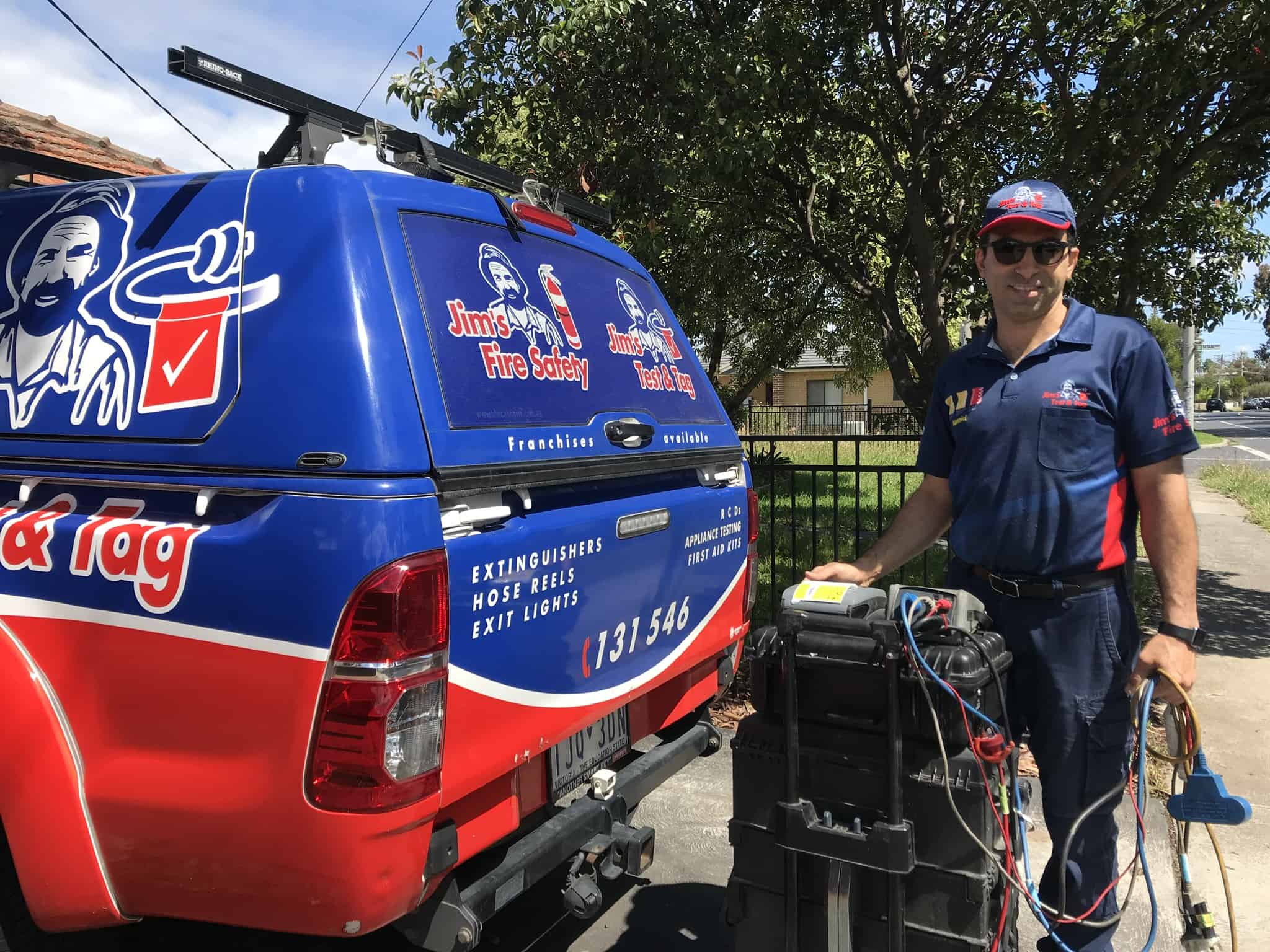
- For patient area,testing, engage qualified testing technicians, certified to test to AS/NZS 3003 such as Jim’s Test & Tag and Fire Safety.
- Schedule periodic testing and retesting
- For devices: follow manufacturer’s guidance, relevant standards (AS/NZS 3551) and at any time where there has been a change or risk introduced.
- For patient areas: conduct annual (or 6-12 months) re-testing of electrical installations in accordance with AS/NZS 3003.
- Ensure documentation & audit readiness
- Keep test reports, calibration certificates, inspection certificates, signage and labelling up to date.
- Ensure you can demonstrate compliance during accreditation.
- Tagging equipment and maintaining an asset database helps. Jim’s Test & Tag provides automated recall reminders”.
- Budget for lifecycle management
- Don’t treat testing/maintenance as an after-thought; build into budget and asset-management plan.
- Understand when devices are nearing end-of-life or when installations need upgrading (e.g., converting older rooms to modern treatment zones).
- Train staff and raise awareness
- Staff should have an understanding of what constitutes a patient treatment area, what the risks are, and what is the process to follow if equipment fails.
- Integrate with broader safety and quality programmes
- Link biomedical/area testing program with the rest of your premises’ Test and tag program. Jim’s Test & Tag can coordinate all your requirements and ensure you are compliant.
- Ensure that when infrastructure is changed (e.g., renovation of a theatre), patient area classification and re-certification are factored in.

For healthcare organisations: the message is clear — inventory your equipment and treatment areas, engage qualified service providers, adhere to schedules, document thoroughly, and treat these activities as core to your operational management rather than as peripheral tasks.
By doing so, you protect patients, safeguard your organisation, and maintain the highest standards of care.
Click to see Technical Guide: Clinical Equipment and Environmental Safety in Australian Healthcare